In this story
By the Investment Mirror team

“I would invest, but I don’t have enough money.” It is one of the most common reasons people put off investing, and it is mostly a myth. Today you can begin with a very small amount, and starting early matters more than starting big. This guide walks you through it step by step.
Why starting small still works
Investing is not only about how much you put in. It is also about how long your money has to grow. Thanks to compounding, your returns can start earning returns of their own, and that effect gets stronger over time.
Here is a simple illustration. Suppose you invest a small amount every month and earn an average of 8% a year (this is only an example, not a promise or a forecast). After 20 years, most of the final amount comes from growth, not from the money you put in. Real returns will vary and can be negative in some years.
The habit you build is just as valuable as the money. Someone who invests a little every month for years often ends up ahead of someone who waits for the “perfect” moment.
Step 1: Get the basics in place first
Before you invest, check these three things:
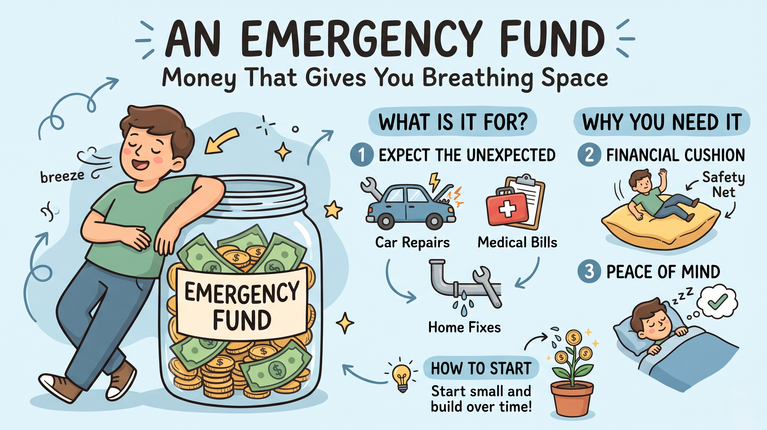
- An emergency fund. Aim to save a few months of living expenses in an easy-access account, so you are never forced to sell investments in a crisis.
- High-interest debt. If you carry credit card or other costly debt, paying it down is often a better move than investing.
- A budget that leaves room. Even a small, steady amount works. Choose a number you can keep up in a tough month.
Step 2: Set a clear goal and timeline
Your goal decides how much risk makes sense.
- Short term (under 3 years): keep money in safer options, not in volatile investments.
- Medium term (3 to 7 years): a mix of safer and growth investments may suit you.
- Long term (7+ years): you have more time to ride out ups and downs, which usually allows for more growth-focused investments.
Write your goal down, such as “build a house deposit in 8 years” or “start a retirement fund.” It makes you far more likely to stay on track.
Step 3: Choose beginner-friendly options
You do not need to pick individual stocks. Many beginners start with:
- Index funds or ETFs: one purchase gives you a slice of many companies, which spreads your risk.
- Mutual funds: professionally managed funds, often available with small monthly contributions (in some countries called SIPs).
- Fixed-income options: bonds or deposits for the more stable part of your money.
Check each option’s fees, because high costs quietly eat into your returns over time.
Step 4: Pick a trustworthy platform
Use a regulated broker or app in your country. Before you sign up, look at:
- Whether it is licensed by your local financial regulator
- Account fees, trading fees, and minimum deposits
- How easy it is to use and how good the support is
- Whether it offers the kind of investments you want
Be cautious of anyone promising guaranteed or unusually high returns. That is a classic warning sign of a scam.
Step 5: Automate and stay consistent
Set up an automatic monthly transfer on the day after you get paid. Investing the same amount regularly means you buy more when prices are low and less when they are high, which can smooth out the ups and downs. It also removes the temptation to time the market, which even professionals struggle to do.
Step 6: Review, but don’t panic
- Check your investments every few months, not every day.
- Increase your contribution when your income rises.
- Do not sell in a panic during a market drop. Falls are a normal part of investing.
Common beginner mistakes to avoid
- Waiting for a “perfect” time to start
- Putting all your money in one stock or one idea
- Following social media tips without doing your own research
- Investing money you will need soon
- Ignoring fees
Quick starter checklist
- Build a small emergency fund
- Pay down high-interest debt
- Set a goal and a timeline
- Choose a diversified, low-cost option
- Open an account with a regulated platform
- Automate a monthly amount
- Review a few times a year
Final thoughts
You do not need to be rich to invest, and you do not need to be an expert. You need a plan, a small amount you can keep up, and patience. Start with what you can, stay consistent, and let time do the heavy lifting.
Up next on Investment Mirror: stocks vs mutual funds vs ETFs, explained simply.
For information only, not financial advice. Investing involves risk, including the loss of money. Past performance does not guarantee future results.